When Should Your Child First See a Dentist? A Mini-Cassia Family Dentist’s Honest Answer at Seasons Dental
Most Idaho parents who ask when to bring a child to the dentist are surprised by the answer. The American Academy of Pediatric Dentistry and the American Dental Association both recommend a first dental visit by age one or within six months of the first tooth coming in, whichever happens first. For a baby whose first tooth appears at six months, that first dental visit happens sometime between six months and one year of age. The recommendation surprises many parents because the appointment seems remarkably early, the child has barely any teeth, and the visit feels like it can wait until the toddler years when more teeth are in. Seasons Dental in Burley sees families across the Mini-Cassia area for these first visits regularly, and Drs. Chad and Ty Bodily have honest answers for the parents who wonder whether the recommendation is really necessary or whether waiting until age two or three would work just as well.
This post covers what the early-visit recommendation is actually based on, what happens at a first dental appointment, and how to handle the situation if your child is already older than the recommended age and has not seen a dentist yet.
Why the First Visit Recommendation Is Earlier Than Most Parents Expect
The age-one recommendation is not arbitrary. It reflects several specific reasons that are based on how children’s teeth and oral health actually develop.
Tooth decay can start as soon as teeth come in. Early childhood caries (the technical term for tooth decay in young children) is the most common chronic disease in childhood, more common than asthma. Babies and toddlers can develop cavities in their primary teeth, and the cavities can progress quickly because primary tooth enamel is thinner and softer than permanent tooth enamel. A six-month-old with a single tooth is technically capable of developing a cavity in that tooth.
Habits that affect dental health start in infancy. Bottle feeding practices, sippy cup use, pacifier habits, and early nutrition all affect long-term dental development. A first visit gives the dentist a chance to identify habits that may need adjustment before they cause problems.
Jaw and bite development can be assessed early. The way a child’s jaw develops in the first few years affects whether orthodontic intervention will be needed later. Early identification of issues like a tongue tie, lip tie, or developing bite problems can sometimes lead to interventions that prevent more substantial corrections later.
Familiarity with the dental environment builds early. Children who first see a dentist as toddlers, when they have minimal awareness of the appointment and no preconceptions about it, often grow up without dental anxiety. Children whose first visit comes at age four or five, after they have heard about cavities and shots and dental fear from siblings or peers, sometimes develop anxiety that is harder to address.
Insurance and access reasons. Many dental insurance plans cover preventive care from the first year of life, and starting early establishes a relationship with a dentist that makes future care easier to schedule and access.
What Actually Happens at a First Dental Visit
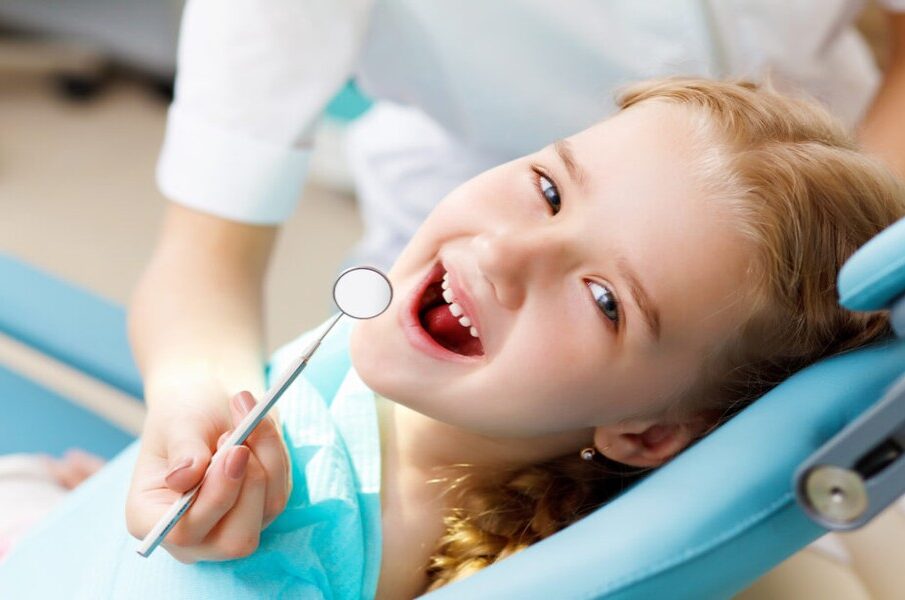
The visual a parent often has of a first dental appointment (a young child in a clinical chair, mouth open, getting an exam like an adult) is not what the visit usually looks like. A first visit for a one-year-old is mostly about familiarity, observation, and parent education.
The dentist or hygienist typically positions the child on the parent’s lap or in a knee-to-knee position with the parent facing the dentist. The child’s head rests in the dentist’s lap while the parent holds the child’s hands and body. The position lets the dentist see into the child’s mouth comfortably while the parent stays right there.
The actual oral exam is brief. The dentist checks the teeth that have come in, looks at the gums and soft tissues, evaluates jaw and bite development, and checks for any early signs of decay or developmental concerns.
Cleaning at this age is gentle. If the child has enough teeth and tolerates it, the dentist or hygienist may use a soft toothbrush or gauze to clean the teeth. There are no x-rays at this age unless a specific concern warrants them. The whole exam usually takes a few minutes.
The parent education portion is often longer than the actual exam. Topics typically include feeding practices that affect dental health, fluoride questions for the local water supply, brushing techniques for young children, pacifier and thumb-sucking habits, when to expect additional teeth, and what to watch for between visits.
Most first visits at Seasons Dental end with the child no more upset than they were when they came in, the parent leaving with practical guidance, and the next visit scheduled six months or a year out depending on the dentist’s specific recommendation for the child.
What If Your Child Is Already Older
Many Mini-Cassia parents reading this have children who are well past the recommended first-visit age and have not seen a dentist yet. The honest answer is that the right time to bring them in is now, not at some future milestone.
Children at age two, three, or four can absolutely have a first dental visit, and the experience is typically very positive when the visit is structured for the child’s age and comfort. The Bodily brothers see plenty of children at these ages for first visits, and the practice’s family-friendly approach is designed to make the experience comfortable rather than scary.
For children at age five or older who have never seen a dentist, the visit is more important rather than less. By this age, primary teeth that should be in for several more years may have developed cavities, and the child may need treatment that should have been simpler if caught earlier. The first visit at this age is also the moment when establishing a positive dental experience matters most for the child’s long-term relationship with dental care.
For any age, the practice handles first visits with patience and the recognition that the child’s comfort during the appointment shapes how they will feel about dental care for years to come.
Building a Positive Dental Experience for Your Child
A few practical steps help make a child’s first dental visit go smoothly.
Schedule the visit for a time of day when your child is typically rested and calm rather than after a missed nap or close to mealtime. Morning appointments often work best for younger children.
Keep the conversation about the visit positive and matter-of-fact rather than over-explaining or promising rewards in ways that suggest something difficult is about to happen. Children take cues from their parents’ tone, and a calm, confident framing produces a calm, confident child.
Avoid using words like “shot,” “drill,” or “hurt” when describing the dentist, even if the child has heard them from older siblings or other sources. The dental team has their own age-appropriate language for any procedures the child might encounter.
Bring a comfort item if your child uses one (a favorite stuffed animal, a familiar blanket) to the appointment. The familiarity helps with the new environment.
Plan to stay calm yourself during the appointment, which is often harder than parents expect. The child’s reading of the parent’s emotional state has substantial influence on how the appointment goes.
Booking Your Child’s First Visit at Seasons Dental
Seasons Dental in Burley provides family dentistry for patients of all ages, including first dental visits for infants and young children. The practice serves families across the Mini-Cassia area, including Rupert, Heyburn, Hansen, Paul, Oakley, Declo, Malta, Raft River, Deary, Richfield, Jackson, Acequia, Minidoka, and Murtaugh. Drs. Chad and Ty Bodily, both fathers themselves, understand that bringing a young child to the dentist for the first time can feel uncertain for parents, and they handle these visits with the same warmth they bring to every patient. Seasons Dental is located at 425 N. Overland Avenue in Burley and can be reached at (208) 679-5888 to schedule a first visit or to ask any questions about what to expect.