
Erectile Dysfunction: When It’s Physical, When It’s Psychological, and What to Do
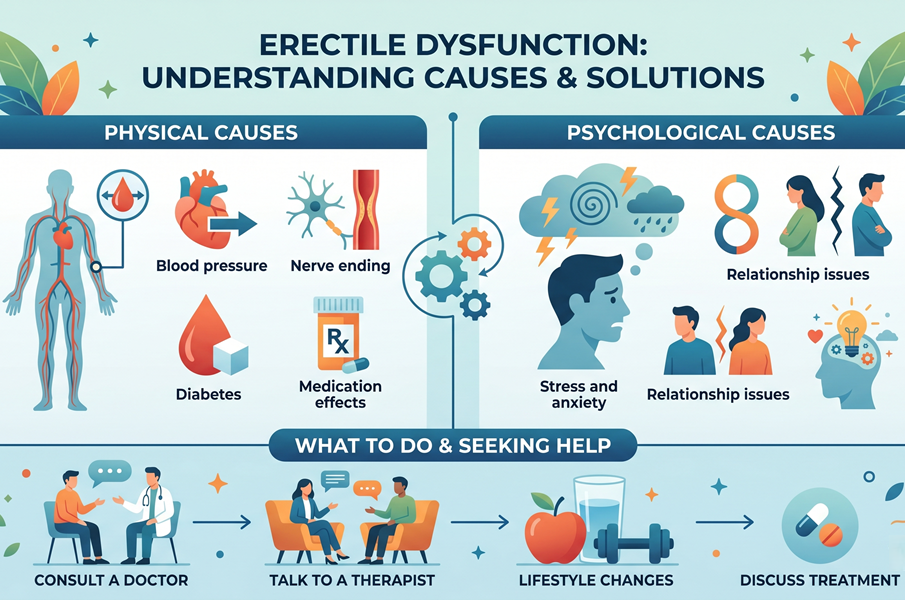
Erectile dysfunction is considerably more common than most men acknowledge, and considerably more treatable than most assume. It affects men across all age groups, though its prevalence increases with age, and it rarely has a single, simple cause. The tendency to either dismiss it as a temporary problem or to assume it is purely physical and therefore a matter for a GP rather than a therapist means that many men spend years managing symptoms without addressing the underlying drivers.
Understanding the distinction between physical and psychological causes of erectile dysfunction, and recognising that the two frequently coexist and amplify each other, is the foundation of an effective response.
The Physical Causes and What They Signal
Erections depend on a coordinated sequence involving the nervous system, hormones, blood vessels, and muscular tissue. Any disruption to that system, from any cause, can interfere with the ability to achieve or maintain an erection adequate for sexual activity. The most common physical contributors include cardiovascular disease and reduced arterial blood flow, diabetes and the nerve damage it produces over time, hormonal imbalances particularly involving testosterone, the side effects of medications including antidepressants, antihypertensives, and some prostate treatments, obesity, smoking, excessive alcohol consumption, and neurological conditions.
When erectile dysfunction occurs primarily or consistently in situations where there is no particular psychological pressure, including during sleep or upon waking, when masturbating, or across all types of sexual activity without variation, a physical cause is more likely to be the primary driver. In that case, a medical evaluation to assess cardiovascular health, hormone levels, and relevant medications is the appropriate first step. Erectile dysfunction in men under 50 is sometimes an early indicator of cardiovascular disease, which makes a medical assessment not just relevant to sexual health but to overall health.
The Psychological Causes and How They Develop
Psychological erectile dysfunction typically develops through a pattern that begins with a single episode of difficulty, often caused by something entirely situational such as stress, fatigue, alcohol, or anxiety, and then becomes self-reinforcing through performance anxiety. The man who experiences one episode of erectile difficulty begins to approach subsequent sexual encounters with apprehension. That apprehension activates the sympathetic nervous system, the body’s stress response, which actively inhibits the parasympathetic activity required for erection. The feared outcome becomes more likely precisely because of the fear of it. This cycle can establish itself rapidly and persist long after the original situational trigger has resolved. Sexual health therapists in Chicago who work specifically with erectile dysfunction recognise this pattern and have structured clinical approaches designed to interrupt it.
Other psychological contributors include generalised anxiety and depression, relationship tension or unresolved conflict with a partner, sexual shame or negative beliefs about sex developed through upbringing or past experience, a history of sexual trauma, and concerns about sexual identity. These factors do not always announce themselves clearly in the context of erectile difficulty, which is why a clinical assessment that explores psychological history alongside physical symptoms is more informative than treating the symptom in isolation.
When Physical and Psychological Causes Overlap
The distinction between physical and psychological erectile dysfunction is useful as a framework but rarely perfectly clean in practice. A man whose erectile difficulties began with a physical cause, reduced blood flow from cardiovascular risk factors for example, will almost certainly develop performance anxiety around the unreliability of his erections over time. That anxiety then adds a psychological layer to a primarily physical problem, and the two interact in ways that make the overall pattern worse than either cause would produce alone.
Similarly, a man whose erectile difficulties began primarily as performance anxiety may, over months of disrupted sexual functioning, develop secondary effects on his relationship, his self-esteem, and his willingness to initiate or engage in sexual activity, all of which compound the original psychological pattern and make it more entrenched.
This is why the most effective treatment approaches for erectile dysfunction rarely involve addressing only one dimension. Medical management of a physical cause works better when the performance anxiety cycle is also being addressed therapeutically. Psychological therapy works more effectively when any relevant physical contributors have been identified and managed.
What Actually Helps
For physical causes, the range of medical interventions includes phosphodiesterase inhibitors such as sildenafil, hormonal treatment where indicated, vascular assessment, and lifestyle modifications that address cardiovascular risk. These are well-established and effective for many men, but they do not address the psychological patterns that have developed alongside the physical issue.
For psychological causes and for the anxiety and relational dimensions that accompany physical ED, cognitive behavioural approaches, sensate focus therapy, and psychosexual counseling have strong evidence bases. These approaches work by interrupting the performance anxiety cycle, restructuring unhelpful beliefs about sexual performance and masculinity, and rebuilding a more relaxed and present approach to sexual intimacy that reduces the pressure that perpetuates the problem.
Involving a partner in the therapeutic process, where the relationship allows for it, tends to produce better outcomes than individual work alone. ED does not occur in a relational vacuum, and a partner who understands the psychological dynamics involved and can participate in structured exercises is a significant asset to recovery.
If you are experiencing erectile dysfunction and want to understand whether the drivers are primarily physical, psychological, or both, and what an effective treatment approach looks like for your specific situation, speaking with a specialist in erectile dysfunction therapy in Chicago is a far more direct path to answers and progress than navigating the subject alone or relying on medication without addressing the full picture.