
Lunch and Learn Ergonomics Workshops for Singapore Offices
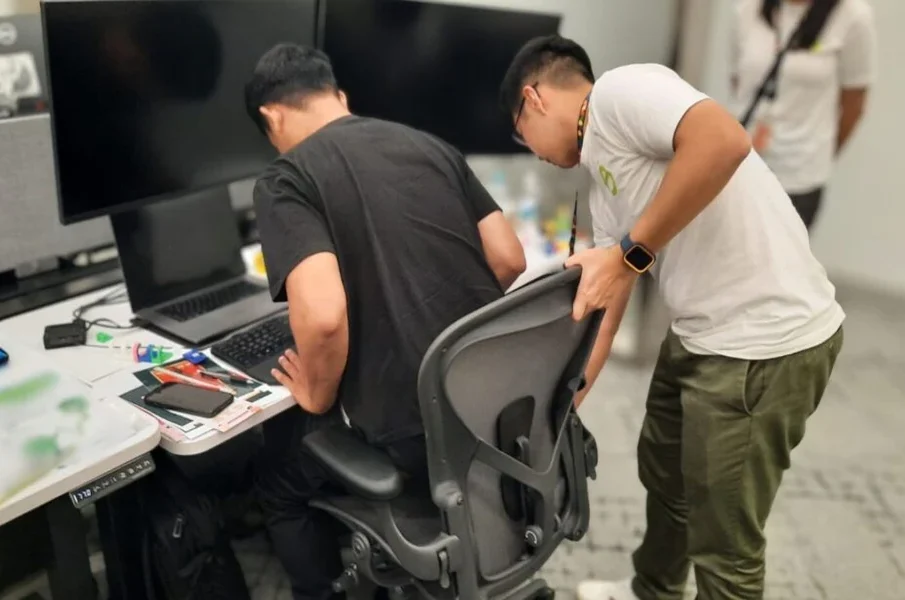
Lunch-and-learn ergonomics workshops for Singapore offices have become one of the more practical investments in employee health that HR and operations teams can make without disrupting the working day. The format works precisely because it requires nothing of the team except their lunch break: no lost productivity, no half-day off-site commitment, and no staff feeling obligated to use personal time for something their employer has organised.
What These Workshops Actually Deliver
The value of a well-run ergonomics workshop is not that staff leave feeling inspired. It is that they leave knowing what to change and why. Inspiration without instruction produces nothing lasting. A practical session that shows each participant how to adjust their workstation, what neutral posture looks like, and how to recognise the early signals of a developing problem gives them tools they can use the same afternoon.
A typical lunch-and-learn session for a Singapore office covers:
- Workstation setup fundamentals – monitor height and distance, chair height and lumbar support position, keyboard and mouse placement
- Common posture problems for desk workers – forward head posture, rounded shoulders, anterior pelvic tilt, and how each of these develops during a typical working day
- Micro-break and movement strategies – simple techniques that can be incorporated into the working day without interrupting workflow
- Warning signs to act on – the difference between normal muscle fatigue and the early indicators of a condition that needs professional attention
When a clinical professional runs the session rather than a general wellness presenter, the content carries more credibility and participants are more likely to act on what they hear.
Why Desk Workers in Singapore Are at Particular Risk
Singapore’s office workforce is predominantly knowledge-based, which means it is predominantly sedentary. Long hours at a screen, combined with the compressed commuting schedule that many CBD workers manage, create a daily pattern of sustained static posture that the human spine and musculature are not well-equipped to handle over years.
The consequences show up gradually. Neck stiffness that is manageable on a Monday becomes a persistent ache by Friday. Shoulder tension that a weekend resolves in the early years begins to take longer to shift. Low back pain that starts as an occasional complaint becomes a daily background condition.
As the Ministry of Manpower has noted in its workplace health advisory guidance, “Musculoskeletal disorders are among the most common and preventable workplace health issues faced by Singapore employees.”Lunch-and-learn ergonomics workshops for Singapore offices address this risk at exactly the right point: before the condition has become a problem requiring treatment.
The Format: Why It Works
The lunch-and-learn model succeeds because it removes barriers. Staff do not have to take time off. They do not have to travel. The session fits into a period that would otherwise be spent eating at a desk or in a pantry anyway. For employers, this means the investment in the workshop is almost entirely the facilitator’s fee, with minimal hidden cost in lost productive time.
For maximum engagement, the best sessions are kept to thirty to forty-five minutes, leave time for questions, and include a physical component where participants actually stand up and adjust their own workstation or practise the movements being discussed. Passive presentations lose an audience far faster than interactive ones.
What Makes a Good Corporate Ergonomics Provider
Not all ergonomics training is delivered by people with the clinical background to make it genuinely useful. When evaluating a corporate wellness and ergonomics programme, ask whether the facilitators are clinically trained professionals rather than general wellness coaches.
A chiropractor or physiotherapist running an ergonomics session brings a diagnostic lens that a wellness presenter cannot. They recognise the compensatory patterns that develop when one area of the body is under strain. They can answer specific questions about individual symptoms with clinical accuracy. And they can flag when a team member’s presentation suggests they need professional assessment rather than just workstation adjustment.
Following Up With Individual Assessments
Many organisations that run a lunch-and-learn discover that a proportion of their team would benefit from individual follow-up. A group session cannot address individual anatomical variation, pre-existing conditions, or the specific workstation configurations that staff use.
A structured programme might pair the lunch-and-learn with an optional round of brief individual posture screenings, giving those who want more specific guidance an accessible next step.
A Starting Point for Workplace Health
For HR and operations teams considering their options for employee wellbeing, lunch-and-learn ergonomics workshops for Singapore offices represent one of the most accessible, cost-effective, and practically useful starting points available. The investment is modest, the format fits naturally into the working day, and the benefit – staff who understand how to protect their own musculoskeletal health – has a long tail.