Postpartum Hair Shedding Calls for Support, Not a Panic Routine
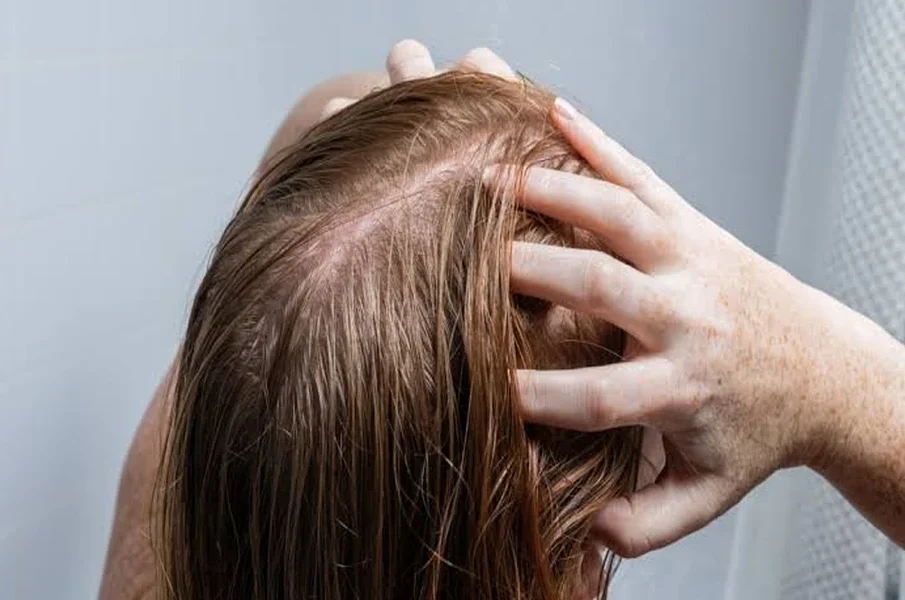
Noticeable shedding a few months after childbirth is common, but the experience can still be distressing. The safest response is not to launch an aggressive “regrowth” stack. Start with timing, gentle handling, realistic nutrition, and scalp comfort; then involve a medical professional when the pattern, symptoms, persistence, or wider health picture does not fit an uncomplicated postpartum course.
Name the phase before trying to fix it
The American Academy of Dermatology explains that many new mothers notice excessive shedding a few months after delivery as estrogen levels fall. Its postpartum hair-shedding guidance describes this as telogen effluvium and notes that it is generally temporary. That context can reduce fear, but it should not be used to dismiss every new parent’s hair change.
Write down when shedding began, whether it is diffuse or concentrated, and whether the scalp is calm. Include birth complications, significant blood loss, illness, medication, appetite, sleep, menstrual changes, and other symptoms for discussion with a clinician. A new parent may have more than one contributor, and a photograph cannot assess iron status, thyroid function, or another health question.
The Truly You postpartum shedding resource includes childbirth among the situations associated with reactional hair loss. Its service menu presents trichology, scalp care, and cosmetic replacement as possible categories. Those categories should be matched to the person’s need: observation and care guidance, medical evaluation, or temporary appearance support.
Make the routine gentler before making it larger
Postpartum life makes elaborate routines hard to sustain. Choose a wash frequency that keeps the scalp comfortable, detangle with patience, and reduce unnecessary heat and repeated high-tension styling. Avoid tight ponytails, heavy extensions, or any style that produces soreness. A shorter haircut or different part may improve manageability, but it does not change the biological cause of shedding.
Condition the lengths according to texture and damage. When the ponytail feels thinner, rough fibres and breakage can make the change look worse. A conditioner or mask may improve handling and appearance even though it is not a treatment for follicle-level hair loss. That distinction is reassuring rather than disappointing: cosmetic care can still make daily life easier.
Introduce no more products than the routine can evaluate. Starting a shampoo, serum, supplement, essential-oil blend, and device on the same day makes irritation harder to trace and benefit impossible to attribute. Any product used while breastfeeding should be checked with an appropriate clinician or pharmacist, especially if it contains medicinal ingredients or carries pregnancy and lactation warnings.
Make room for the sensory side of care. Hair on clothing, a clogged drain, or a changed part can become a repeated stress cue. Ask a partner to handle drain cleaning, limit photographs to a planned interval, and put away the strand-counting habit if it fuels worry. These are coping choices, not measures of how serious the shedding is.
Nutrition support is not the same as supplement shopping
Regular meals can be difficult with a newborn, and nutrition belongs in the conversation. Begin with access: foods that are practical, culturally familiar, affordable, and easy to eat during a demanding day. Hydration, adequate energy, protein sources, and an overall varied diet matter more than a viral “hair vitamin” with a dramatic label.
Do not assume that fatigue proves a nutrient deficiency; new parenthood itself is exhausting. Likewise, do not assume that a supplement is harmless because it is sold for beauty. Doses can overlap with prenatal or postnatal vitamins, some ingredients can interfere with medications or tests, and unnecessary high doses are not a substitute for an assessment.
If diet has become very restricted, appetite is persistently poor, weight is changing unexpectedly, or there are other symptoms, discuss them with a family physician or qualified dietitian. Laboratory testing should follow the health history and a defined clinical question. Online supplement quizzes cannot provide that context.
Know what moves the issue out of watchful support
Book medical review when hair loss is patchy rather than diffuse, the scalp is painful or inflamed, there are sores or signs of infection, eyebrows or other body hair are affected, or the shedding accompanies other new symptoms. Review is also reasonable when the change feels severe, continues to worsen, or does not follow the recovery pattern described by a clinician.
A qualified trichology visit can help organize hair history, scalp condition, photographs, and routine questions while maintaining the medical boundary. The Truly You trichology clinic page says its trichologist may work with a doctor or dermatologist and may request medical testing under appropriate supervision. Ask how referrals work and which findings would be sent back to medical care.
Cosmetic support is also legitimate. A volumizing cut, gentle styling, topper, scarf, or wig can reduce daily distress while time and medical care address the underlying issue. The right choice is the one that feels comfortable, does not add damaging tension, and does not force the wearer to disclose more than they want.
If a hairpiece is considered, test it during a normal feeding, carrying, and rest routine. Check heat, grip, scalp access, and the time needed to put it on. The most natural-looking option is not useful if it adds pressure or another complicated task to every morning.
Postpartum shedding occurs during a period already crowded with demands. A good plan protects the scalp, keeps the routine small, treats nutrition with nuance, and creates a clear point for professional review. It should return time and confidence to the new parent-not turn recovery into another performance.