QR678 Injections for Hair Loss: The Science Behind This Proprietary Treatment
There is a specific kind of frustration that comes from doing everything right and still watching the hair thin. The diet is decent, stress is being managed as well as city life allows, maybe even a few months of minoxidil have been tried. And yet the follicles keep producing weaker, finer strands until some of them stop producing anything at all. That is follicle dormancy, and it is the point where lifestyle corrections and nutrition hit their ceiling. The follicle is not dead. It is stuck in a resting phase, and it needs a direct signal to transition back into an active growth phase.
According to a recent study done over 1,50,000 individuals across India, 68% of people dealing with hair loss reported high stress levels and 43% had irregular sleep, both of which accelerate follicle dormancy in people who are already genetically predisposed. When the environment and the genetics are working against the follicle simultaneously, surface level interventions run out of road fast.
What Is QR678 and How Is It Different from PRP and GFC?
PRP and GFC both extract growth factors from the patient’s own blood. They work well for stimulating follicles that are sluggish, and for many patients they are the right starting point. But their composition changes from session to session because it depends on the patient’s blood quality on that particular day, how it was processed, and the kit that was used.
QR678 takes a fundamentally different approach. Instead of relying on what the patient’s blood happens to contain, qr678 treatment uses a pre engineered, patented formulation of specific growth factors and peptides that are known to drive hair follicle activity. Each of these has a specific role in follicle biology:
- VEGF improves blood supply to the follicle, ensuring it gets enough oxygen and nutrients to sustain active growth
- bFGF stimulates the dermal papilla cells at the base of the follicle, which are the control centre for the entire growth cycle
- IGF 1 extends the anagen phase, keeping the follicle in active production for longer before it transitions back to rest
- KGF supports the structural cells that form the hair shaft itself, improving strand thickness and integrity
- Copper tripeptide 1 strengthens the follicle base, encourages blood vessel formation around the root, and has been shown to increase follicle size
Proprietary growth factor hair formulations like QR678 deliver the exact same concentration of the exact same signalling molecules every single session. There is no variability depending on blood draw quality or centrifuge settings. For patients with androgenetic alopecia treatment needs that have not responded adequately to PRP or GFC, or for cases where the thinning is more advanced, that precision matters.
How QR678 Targets Hair Follicles to Reverse Thinning
Hair growth is not random. It is governed by chemical signals that tell the follicle when to grow, when to rest, and when to shed. In a healthy cycle, the follicle spends most of its time in anagen (the growth phase), with short transitions through catagen (regression) and telogen (rest) before starting over. In androgenetic alopecia, DHT disrupts this signalling. The anagen phase shortens progressively, telogen stretches out, and each cycle produces a thinner, shorter strand until the follicle eventually stops cycling altogether.
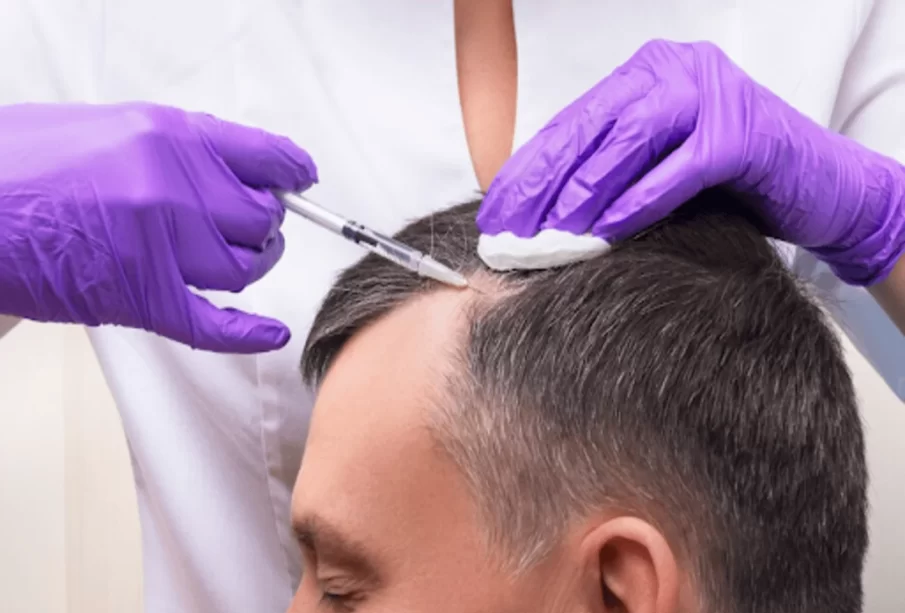
What QR678 injections for hair loss do at the biological level is intervene directly in that signalling chain. The growth factors in the formulation are the same proteins that the body uses to initiate and sustain anagen, but delivered in a concentrated, targeted dose directly into the scalp tissue surrounding the affected follicles. The idea is not to override the body’s processes but to supplement them precisely where they have become insufficient.
Published studies in the Journal of Cosmetic Dermatology have documented its effectiveness in persistent telogen effluvium following COVID 19 infections, in PCOS linked female pattern hair loss, and even in chemotherapy induced alopecia where follicle recovery is notoriously difficult.
Clinical Success and Expected Results with QR678
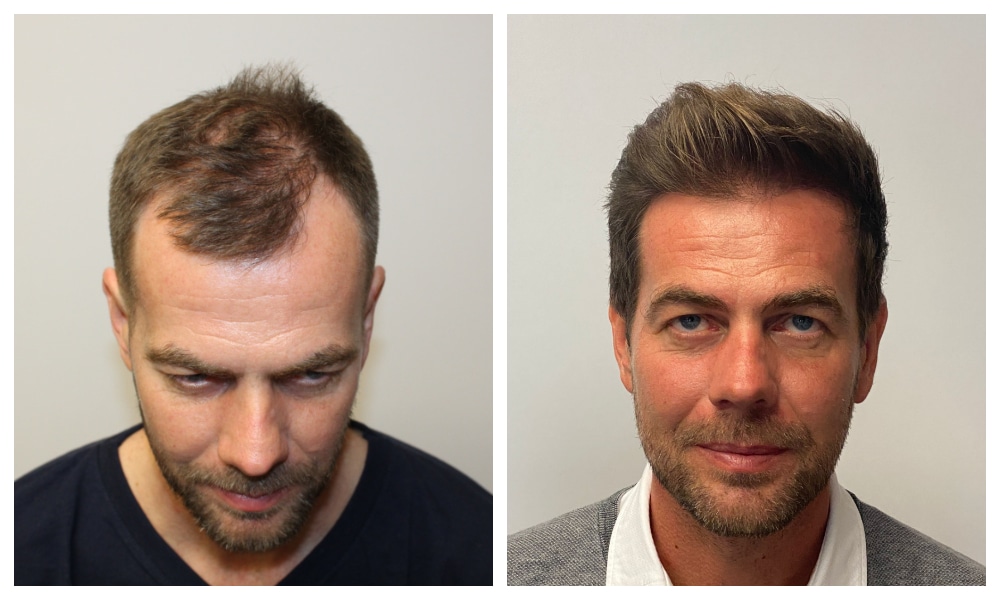
The clinical evidence behind QR678 is more substantial than what most proprietary growth factor hair treatments can claim. The first human clinical trial demonstrated a significant reduction in hair loss in 83% of patients using the hair pull test, with videomicroscopic imaging confirming a measurable decrease in vellus (fine, miniaturised) hairs and an increase in terminal (thick, healthy) hair count over 12 months.
For persistent telogen effluvium cases, a prospective study found that 89% of patients showed excellent hair regrowth after 8 sessions, with improvements in density that continued even after the treatment course was completed.
What the treatment course looks like:
- Sessions are short, typically 10 to 15 minutes of actual injection time per sitting
- No anaesthesia is required, and there is zero downtime afterward
- A standard protocol involves 5 to 8 sessions, spaced 3 to 4 weeks apart
- Reduced shedding is typically the first noticeable change, often within the first few sessions
- Visible density improvement becomes apparent between months three and six
- Results at 12 months show the full extent of the treatment’s impact on hair count and thickness
What to realistically expect:
- Hair regrowth injection Delhi patients see responds best when the treatment begins at early to mid stages of thinning, before the follicles have fibrosed shut
- QR678 works across hair loss types including androgenetic alopecia, telogen effluvium, alopecia areata, and post chemotherapy recovery
- It pairs well with existing protocols. Patients already on finasteride or minoxidil can add QR678 for a layered approach, and it is also used post transplant to support graft health and protect non transplanted zones
Hair regrowth treatment Clinics across Delhi NCR that offer the full spectrum of treatment options, including Evoke Hair Clinic, typically evaluate whether QR678 is the right fit during the initial diagnostic consultation. The decision depends on the type of hair loss, the stage of progression, how the patient has responded to previous treatments, and what the scalp assessment reveals about follicle viability in the affected zones.