Bite Correction: Aligners or Braces and How to Choose the Right Treatment
Why the method of bite correction matters
Bite correction is not the same for every patient. Although many people have similar complaints such as crooked teeth, crowding, or an uneven smile, the underlying orthodontic problem may be very different from one case to another.
Some patients need only mild adjustment of tooth position, while others require complex correction of the way the upper and lower dental arches interact. Because of this, choosing the right treatment method is one of the most important parts of orthodontic care.
Today, the two most common options for bite correction are clear aligners and braces. Both systems are designed to move teeth, but they do so in different ways and are not equally suitable for every case.
What braces do in bite correction
Braces are fixed orthodontic appliances attached to the teeth for continuous treatment. They use brackets and wires to create controlled pressure and guide teeth into new positions over time.
Because braces remain on the teeth at all times, they work continuously without relying on the patient to remember to put them back in. This makes them especially useful in cases where strong and stable force is needed.
Braces are often chosen for more severe or technically difficult bite corrections, particularly when the movement of teeth must be very precise or extensive.
What aligners do in bite correction
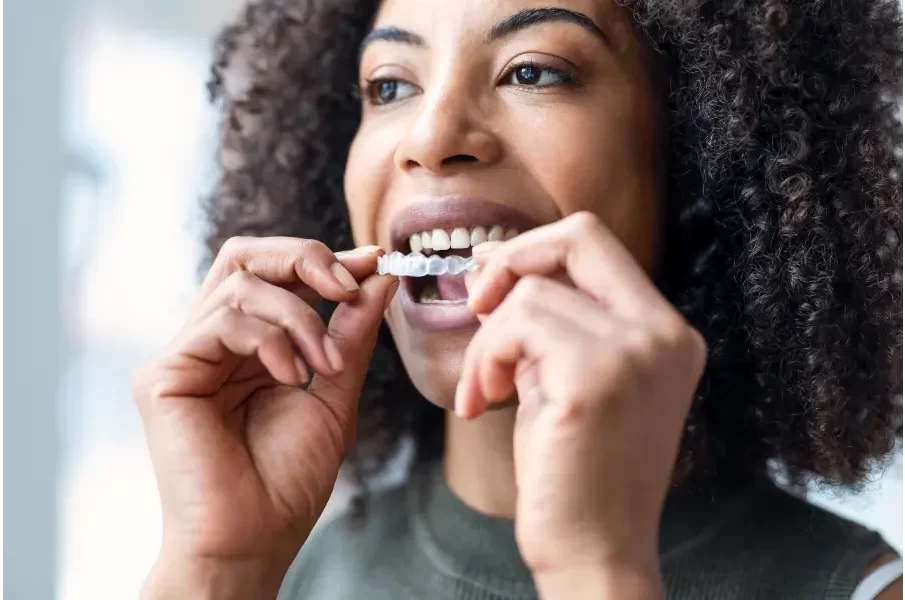
Aligners are removable transparent trays made specifically for each stage of treatment. They gradually move the teeth using a sequence of custom-designed appliances.
Their major advantage is that they are less visible and more convenient in everyday life. Patients can remove them for meals and oral hygiene, which makes treatment easier to integrate into normal routines.
For many mild to moderate bite corrections, aligners can be an effective alternative to braces. However, their success depends heavily on how consistently they are worn.
Comparing aesthetics during bite correction
Aesthetics is one of the main reasons many patients prefer aligners. Because they are clear and fit closely over the teeth, they are difficult to notice during conversation or smiling.
Braces are usually more visible, especially when attached to the outer surfaces of the teeth. Although there are less noticeable orthodontic options, most fixed systems still remain more apparent than transparent aligners.
This difference matters greatly to adults, teenagers, public-facing professionals, and anyone who feels uncomfortable about visible orthodontic appliances.
Comparing comfort and adaptation
The adaptation period can vary depending on the treatment system. Many patients find aligners easier to get used to because they are smooth, lightweight, and do not contain metal parts that may rub against the cheeks or lips.
Braces may require a longer adjustment period. They can cause soreness after placement and after regular tightening appointments. Some patients also experience temporary speech changes or irritation of soft tissues during the first stage of treatment.
Aligners can still create pressure and mild discomfort, especially when switching to a new tray, but many people consider this easier to tolerate.
Comparing oral hygiene during treatment
Oral hygiene is a very important part of bite correction because orthodontic appliances can create new areas where plaque accumulates.
With braces, cleaning becomes more difficult. Patients often need special brushes, additional hygiene tools, and more time to remove food particles and plaque around brackets and wires.
Aligners are removable, so patients can brush and floss their teeth in the usual way after taking them out. This makes daily hygiene much simpler and may reduce some of the challenges associated with orthodontic care.
Comparing food and lifestyle restrictions
Another major difference between the two systems is flexibility in daily life.
Braces usually require dietary caution. Hard, sticky, or crunchy foods can damage parts of the appliance and may need to be avoided. Some sports and active lifestyles also require extra care because impact can injure the mouth when fixed metal components are present.
Aligners are removed before eating, so they do not place the same food restrictions on the patient. This makes treatment more convenient for many people. However, they must still be worn for the required number of hours per day, which means convenience should not be confused with freedom to use them inconsistently.
Comparing follow-up and patient responsibility
Braces require regular orthodontic visits because the doctor needs to adjust the appliance and monitor movement directly. Since the system is fixed, the treatment works continuously between visits.
Aligner therapy also requires professional monitoring, but it gives the patient more responsibility. The patient must wear the trays consistently, change them at the correct time, and follow instructions carefully. If aligners are not worn long enough each day, tooth movement may slow down or fail to follow the treatment plan.
This means aligners are often best suited to disciplined patients who are willing to cooperate fully throughout the entire course of bite correction.
Which bite problems may require braces
Although aligners are widely used today, there are situations where braces remain the more appropriate choice. Severe malocclusions, complex rotations, major jaw-related discrepancies, and certain difficult tooth movements may respond better to fixed appliances.
Braces can create stronger and more constant mechanical control, which is sometimes necessary for complicated correction. In such cases, choosing aligners simply for comfort or appearance may not produce the most effective outcome.
The decision should always be based on clinical need rather than preference alone.
When aligners may be a good option
Aligners may be an excellent choice for patients with mild to moderate bite issues, spacing, crowding, or relapse after previous orthodontic treatment. They are also attractive for people who want a discreet appearance, easier hygiene, and fewer disruptions to everyday habits.
For the right patient and the right clinical situation, aligners can provide effective bite correction while offering a more comfortable treatment experience.
Still, they work best when the patient understands that successful treatment depends on daily consistency.
Why diagnosis comes first
No comparison between aligners and braces is complete without mentioning diagnosis. It is impossible to choose the best method of bite correction based only on appearance or personal preference.
A full orthodontic evaluation is needed to understand the exact type of malocclusion, the degree of tooth displacement, the condition of the gums and teeth, and the overall treatment goals. Only then can the orthodontist determine whether aligners or braces are the better solution.
In many cases, what looks like a simple cosmetic issue may actually involve a more complex functional problem.
Conclusion
Bite correction can be achieved with both braces and clear aligners, but these methods are not interchangeable in every situation. Braces offer strong and continuous control, which is especially useful in more complex cases. Aligners provide a discreet, comfortable, and hygienic alternative for many mild to moderate corrections.
The best treatment is not the one that looks more modern or convenient, but the one that matches the patient’s clinical needs and ability to follow the treatment plan. That is why accurate diagnosis and professional guidance remain the foundation of successful orthodontic care.