
Morning Stiffness and Lower Back Pain Relief Through Adjustments
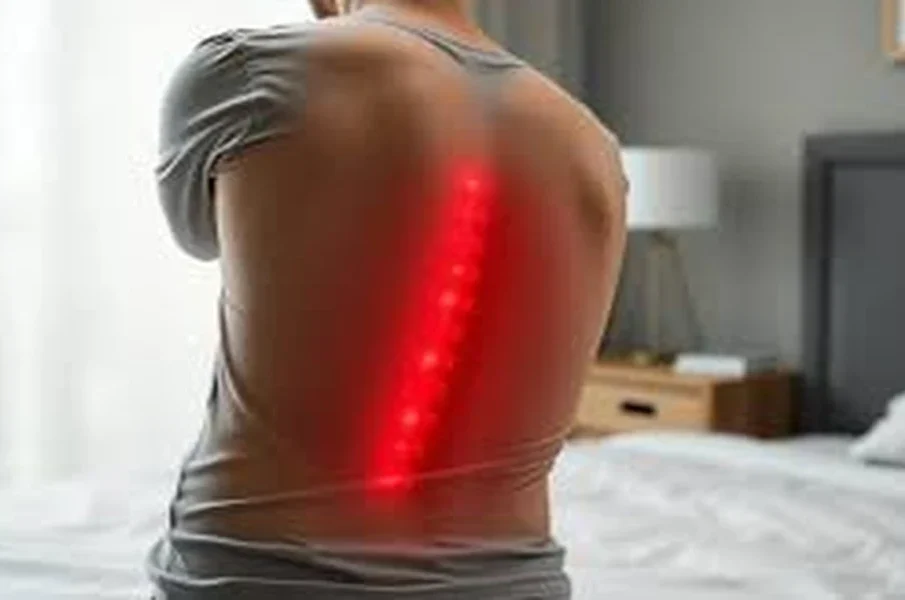
The first ten minutes of the day tell you a great deal about a back. Some people wake stiff, move around, and feel normal by the time they reach the kitchen. Others wake fine and stiffen as the day goes on. The pattern is diagnostic information rather than a nuisance, and it shapes whether morning stiffness and lower back pain relief through adjustments is a sensible approach or whether something else is going on.
Why Backs Are Stiff in the Morning
Several ordinary mechanisms combine overnight. Inter vertebral discs absorb fluid while you are lying down, so they are at their most hydrated and least compressible on waking, which makes bending forward stiffer first thing. Joints have been held still for hours, so the synovial fluid that lubricates them has not been circulated. Muscles have not moved. In most people this produces stiffness that eases within fifteen to thirty minutes of getting up and moving.
The Pattern That Matters Clinically
Brief morning stiffness that resolves quickly with movement is typical of mechanical back pain. Stiffness lasting more than half an hour to an hour, particularly in someone under forty, accompanied by pain that improves with exercise and worsens with rest, and waking them in the second half of the night, is a different pattern. That combination warrants medical assessment rather than manual therapy, because it can indicate an inflammatory condition requiring different management entirely. A clinician should ask about duration specifically.
What an Adjustment Does
A spinal adjustment applies a quick, controlled force to a specific joint, often accompanied by an audible release as gas comes out of solution in the joint fluid. The sound has no clinical significance and does not indicate anything being put back into place. What the technique aims to achieve is a short-term reduction in pain and an improvement in movement at a restricted segment, which for many people makes the first hour of the day considerably easier.
What It Does Not Do
It does not realign a spine that was out of position, and it does not correct a structural problem. Vertebrae do not slip out and get pushed back in. Understanding this matters because it reframes the treatment honestly: an adjustment creates a window of reduced pain and better movement, and what happens in that window determines whether the improvement holds. Any clinic explaining it in terms of bones being put back is describing something that does not happen.
The Role of Mobilisation
Where an adjustment is not appropriate, or where a patient finds it uncomfortable, mobilisation achieves similar aims through slower, oscillating pressure without a thrust. It suits older patients, people with reduced bone density, those who are anxious about the technique, and presentations where a gentler approach is indicated. Practitioners providing chiropractic treatment for lower back pain should be comfortable offering either and should explain why they are recommending one.
Bed, Sleep Position and the Mattress Question
People blame the mattress often and correctly sometimes. The evidence favours a medium-firm surface for most people with back pain rather than the very firm mattress that was traditionally recommended, though individual comfort matters more than any general rule. Side sleepers usually benefit from a pillow between the knees, back sleepers from one under the knees. Sleep quality itself matters independently, since poor sleep measurably lowers pain thresholds and makes any back problem feel worse.
The First Fifteen Minutes
Rather than getting straight out of bed and bending to put on shoes, which loads a hydrated disc at its stiffest, a few gentle movements while still lying down help: knees to chest one at a time, gentle rotation with knees bent, then rolling to the side to sit up rather than curling straight forward. Then walk for a few minutes before doing anything demanding. This costs five minutes and changes how the first hour feels for a great many people.
Stiffness That Follows a Long Day Instead
The opposite pattern is just as common and points elsewhere. Someone who wakes comfortably and stiffens through the afternoon is usually describing a load tolerance problem rather than a joint one: the tissue copes with the first few hours and not the ninth. The useful interventions there are different, centred on breaking up sustained positions during the day and building capacity over weeks, with hands-on treatment playing a smaller role. Telling a clinician which of the two patterns you have, in those terms, is one of the more useful things you can do in a first appointment.
Exercise Is What Makes It Last
Manual therapy relieves; loading changes tolerance. A programme for mechanical low back pain usually builds hip and trunk strength, restores movement in stiff segments, and progressively reintroduces the activities the person has been avoiding. It works over weeks rather than sessions and it is the part that reduces recurrence. A course of adjustments with no exercise component tends to produce a patient who returns at similar intervals indefinitely.
When to Get It Checked Medically
Seek medical assessment rather than manual therapy if there is unexplained weight loss, fever, night pain unrelieved by rest, progressive leg weakness or numbness, changes in bowel or bladder control, numbness around the saddle area, a history of cancer, or significant recent trauma. These are uncommon and they are the reason a first appointment includes screening. Where the presentation is ordinary mechanical stiffness, morning stiffness and lower back pain relief through adjustments paired with exercise is a reasonable and well-supported approach.